Why the Capital City Roofing Licensing Platform Runs on BuilderLync
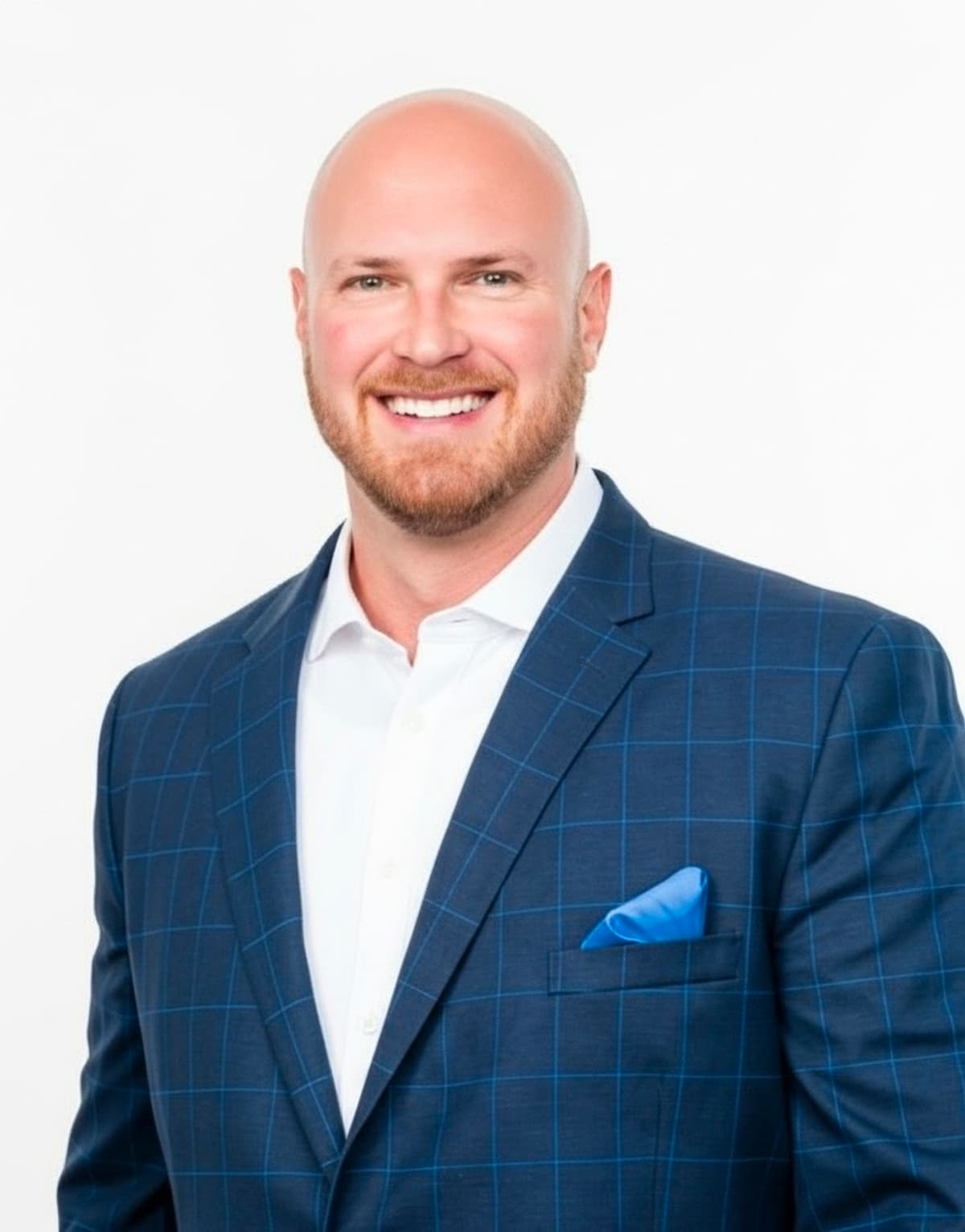
Capital City Roofing's Brad Strawbridge was quoted in 1851 Franchise on CRM selection for franchisors. Here is the company-side answer: why CCR licensees inherit BuilderLync as the operating system from day one.
Capital City Roofing founder Brad Strawbridge was quoted this week in 1851 Franchise's article on CRM selection for franchisors, reported by Luca Piacentini. The article walks emerging franchisors through the CRM decision, with Brad as the primary expert quoted throughout. This post is the company-side answer: why Capital City Roofing's tech stack runs on BuilderLync, and why every Capital City Roofing licensee inherits it as the operating system from day one.
The article behind this post
1851 Franchise published Luca Piacentini's piece on May 1, 2026. The thesis: from lead management to systemwide visibility, the right CRM can define how effectively a franchise scales or whether it struggles to maintain consistency across locations. Brad provided the operator-side perspective throughout. Three of his quotes carry the central argument:
- "The right CRM isn't the one with the most features. It's the one that enforces consistency across every location without slowing operators down."
- "We use BuilderLync, which we built ourselves after running two CRMs in parallel and watching leads slip through the cracks."
- "Pipeline visibility is what separates franchise systems that scale from those that stall."
If you are an emerging franchisor or licensing operator evaluating a CRM right now, read the full 1851 Franchise article first. Brad also published an operator-side companion essay on his personal site that walks through the longer story behind each of those quotes, including why he and his co-founder built BuilderLync when no off-the-shelf platform met the requirements.
This post explains how those decisions translated into the operating system every Capital City Roofing Licensing Platform licensee inherits.
Why generic CRMs fail in multi-operator brand systems
Most emerging franchisors default to whichever well-known CRM has the cleanest demo. The mistake is not the choice itself. The mistake is the evaluation frame. Feature comparison is the wrong frame because feature breadth and operator adoption are weakly correlated. A CRM with one hundred features that operators do not use is operationally worth less than a CRM with twenty features that every operator runs through every day.
Capital City Roofing learned that lesson by running two off-the-shelf CRMs in parallel before building BuilderLync. One was too generic, built for a software company's idea of a sales team. The other was too vertical-specific in the wrong direction, built for an adjacent trade and retrofitted for roofers. Neither was bad software. Both had loyal customer bases. The problem was that neither was built for how home services franchise and licensing systems actually operate, and the cost of forcing fit was higher than the cost of building from scratch.
That experience shaped the requirements for the licensing platform's tech stack. The CRM had to enforce brand non-negotiables without creating friction at the operator level. It had to give the franchisor real-time visibility without burying operators in admin overhead. It had to be purpose-built for home services, not retrofitted from another vertical. And it had to keep operator adoption high, because adoption is the only metric that determines whether the system has any data to work with.
The answer was BuilderLync.
How BuilderLync enforces three non-negotiables across every licensee market
In the 1851 Franchise article, Brad described three non-negotiables our CRM enforces across every licensee market. Each one solves a problem that breaks franchise and licensing systems at scale.
Sub-minute lead response
Speed-to-lead is the highest-leverage variable in roofing customer acquisition. The first contractor to respond to an inbound lead wins the job more than half the time. As Brad put it in the article: "We needed speed-to-lead under 60 seconds. Speed-to-lead alone lifted conversion measurably, because the first contractor to respond wins the job more than half the time."
Enforcing sub-minute response across one location is hard. Enforcing it across every licensee market without a centralized system is impossible. BuilderLync handles it automatically. Inbound leads route to the right operator within seconds. Auto-alerts fire if the operator does not engage. Response time is tracked at the rep level so the franchisor and the licensee can both see where the system is working and where it is breaking.
Standardized pipeline stages
Without standardized stages, the franchisor cannot benchmark across markets. If one licensee uses ten stages and another uses three, comparisons become impossible. Coaching becomes impossible. Identifying which workflows are working and propagating them across the platform becomes impossible.
Every Capital City Roofing licensee runs the same pipeline stage definitions on day one. The stages are extensible at the licensee level for legitimate market-specific reasons, but the core stages are locked. That means a deal in stage five at one licensee means the same thing as a deal in stage five at another licensee. The platform has a shared operational vocabulary, which is the precondition for everything else.
Real-time visibility for the franchisor
Real-time visibility is what lets the franchisor coach, forecast, and intervene in the present tense rather than reading post-mortems on lagging indicators. As Brad told 1851 Franchise: "If I can't see deal velocity, stuck stages, and rep-level close rates across every licensee in one view, I can't coach, forecast, or intervene."
BuilderLync gives the franchisor a single view of every licensee's pipeline. When a deal sits in a stage longer than benchmark, the franchisor sees it. When a rep's close rate drops, the franchisor sees it. When a market shows unusual lead-volume movement, the franchisor sees it. That visibility is what separates a franchise system that scales from a loose network of operators sharing a logo.
What a Capital City Roofing licensee inherits on day one
Every licensee on the Capital City Roofing Licensing Platform inherits the full operating system, not just the brand. The tech stack is one piece of a larger inheritance.
- BuilderLync as the underlying operating system. Lead intake, instant routing, proposal generation, dispatch, supplements, financial management, and analytics all run inside one platform built for the way contractors actually work. Available standalone to non-licensees as well at builderlync.com.
- Standardized workflows. The same pipeline stages, the same handoff protocols, the same data fields, and the same operational architecture Capital City Roofing runs on every day across Greater Atlanta and Nashville.
- Capital City University training. The full internal curriculum that keeps every CCR team member trained and current on certifications, product specs, warranty terms, and customer service standards. Licensees and their teams complete the same training.
- Back-office support. Insurance supplement processing, marketing operations, and financial systems support that scales with the licensee's revenue.
- The Capital City Roofing brand. Same standards, same reputation, same proof on the record.
More on the licensing platform at /licensing. More on the company at /about, /why-capital-city-roofing, and /team.
Adoption stays high because the platform respects how operators sell
The most important sentence in the 1851 Franchise article is the one about adoption: "Pick the CRM that matches how your franchisees actually sell, not how a software company thinks they should sell. Adoption dies the moment the system fights the operator."
That sentence is the design constraint behind BuilderLync. The platform was built by people who run roofing companies every day. Mobile field tools work the way crews actually use phones. Dispatch logic respects how trucks actually get scheduled. Insurance claim workflows handle Xactimate-ready documentation, supplement tracking, and adjuster communication the way they actually flow in real claims. Storm response logic accounts for the urgency spikes after a hail event without breaking everything else.
The result is that operators run BuilderLync because it makes their job easier, not because the franchisor is forcing them to. That is the only sustainable adoption model. Anything else collapses at scale.
Data ownership is structural, not negotiated
The last point Brad made in the 1851 article was about data ownership. Franchisees come and go. Lead history, customer records, and performance data are franchise assets the franchisor should control. Most emerging franchisors do not think about this until an operator exits, and by then it is too late.
The Capital City Roofing licensing platform handles this structurally. Customer relationships, lead history, and performance data live in BuilderLync, which the licensee uses but the franchisor's data architecture is built around. When a licensee exits, the data does not exit with them. The market keeps its institutional memory, and the next operator inherits a working pipeline rather than a blank slate.
That is one of the structural differences between a licensing platform and a traditional franchise. The data architecture was a deliberate design choice, made years before any licensee market needed it.
The proof behind the system
Capital City Roofing did not start as a licensing platform. It started as a roofing company that earned its reputation in Greater Atlanta and Nashville the same way every roofing company has to earn it: one job at a time, one customer at a time, one referral at a time.
The proof is on the record:
- GAF Master Elite Contractor
- GAF Commercial Certified
- CertainTeed ShingleMaster Premier
- GenFlex Commercial Certified
- Roofing Alliance Guarantor Member
- Google Guaranteed
- NRCA Member
- Roofing Technology Think Tank (RT3) Board of Directors
- 250+ Google Reviews at 4.9 to 5.0 stars
Full certification details at /certifications. Meet the team at /team.
The licensing platform exists because operators in other markets started asking how to run their companies the way we run ours. The technology stack underneath is part of the answer.
Read both pieces together
The CRM question Brad answered in 1851 Franchise overlaps with the franchise due diligence questions he answered last week in Roofing Contractor. We covered the company-side response to that one in Why We Built Capital City Licensing Instead of Becoming a Franchise. The two pieces are intentionally connected. The franchise model question is structural. The CRM question is operational. Both have to be answered correctly for a multi-operator brand system to scale.
For a deeper company-side view of how AI sits on top of this operating system, see How Capital City Roofing Uses Claude AI and BuilderLync to Automate Roofing Operations From Day One.
Roofing Contractor returned to this question in its 2026 technology special section, framing it as a race between distributor-funded CRMs and contractor-built operating systems. Our breakdown of that buying decision is Distributor CRM vs. Contractor Operating System.
Where to go from here
If you are a roofing contractor evaluating a CRM right now, the conversation can start in two places. For the technology layer alone, BuilderLync is available standalone. For the full operating system plus the brand and the back-office support, the Capital City Roofing Licensing Platform is one path worth evaluating. The entry point for that conversation is licensing@capitalcityroofing.net. Brad reads every one of those emails personally.
If you are a franchisor or franchise leader thinking through your own CRM decision, the 1851 Franchise article and Brad's operator-side companion essay cover the question from both angles.
For homeowners and property managers in Greater Atlanta and Nashville: this post is aimed at industry operators rather than customers. If you are looking for residential or commercial roofing services, schedule your free 27-Point Inspection or contact our team directly.
Excellence in Roofing, Powered by Innovation and Integrity.
Learn more: Capital City Licensing Platform | BuilderLync CRM | Why Capital City Roofing | Brad Strawbridge | About Capital City Roofing
Brad Strawbridge
Founder & CEO · Forbes Business Council Member • RT3 & NRAP Board of Directors • GAF Master Elite® • CertainTeed ShingleMaster™ • NRCA Residential & Workforce Development Committees
Brad Strawbridge is the Founder and CEO of Capital City Roofing, bringing over a decade of hands-on expertise to the industry. He is an official member of the Forbes Business Council, the invitation-only community for vetted senior-level business leaders, and serves on the Boards of Directors of the Roofing Technology Think Tank (RT3) and the National Roofing Apprenticeship Program (NRAP). A member of the National Roofing Contractors Association (NRCA), Brad has been appointed to the NRCA Residential Roofing Committee and the NRCA Workforce Development Committee, helping set national standards for installation quality and the future of the roofing labor force. Under his leadership, Capital City Roofing has achieved elite certifications held by fewer than 1% of contractors nationwide.